A novel approach to teaching cybersecurity integrates AI tools and gamified learning, enhancing students' critical thinking and practical skills.
In the evolving world of cybersecurity education, the challenge of integrating AI into the classroom represents both a dilemma and an opportunity. While some educators grapple with concerns over academic integrity and the diminishing role of traditional assessment methods, I embraced AI as a tool for enhancing student engagement and cognitive skills. This decision, made while teaching at Majan University College, fundamentally transformed my approach to teaching cyber threats.
The Challenge of Traditional Approaches
The rapid pace of change in cybersecurity outstrips the ability of conventional curricula to adapt. Threat actors are continually devising new strategies, and vulnerabilities arise daily. Students often find themselves grasping theoretical concepts, yet they frequently struggle to apply this knowledge in real-world scenarios. My observations highlighted a concerning disconnect: while students could define vulnerabilities, they froze at the prospect of identifying them in live environments.
Transforming Learning through Practical Tools
The first major shift in my teaching was introducing students to industry-standard tools. By partnering with Tenable, I secured free licenses for Nessus Essentials, allowing students to scan their own lab environments. This hands-on experience enabled them to uncover genuine vulnerabilities within their own machines, thus bridging the gap between theory and practice. For instance, discovering a critical bind shell backdoor on their own system transforms abstract learning into urgent, personal responsibility.
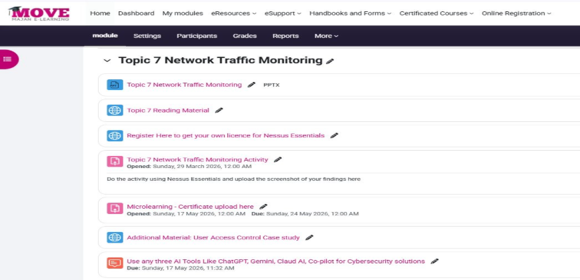
Figure 1 — Topic 7: Network Traffic Monitoring on MOVE.
Evaluating AI Solutions to Tackle Vulnerabilities
After students identified specific vulnerabilities, I tasked them with consulting three AI tools—such as ChatGPT, Google Gemini, and Claude AI—to compare their remediation suggestions. This exercise encouraged them to critically evaluate the solutions proposed, fostering rich discussions and insights. The varied outputs from the different AI tools illuminated the nuances in technical depth and applicability, revealing the value of critical AI literacy.
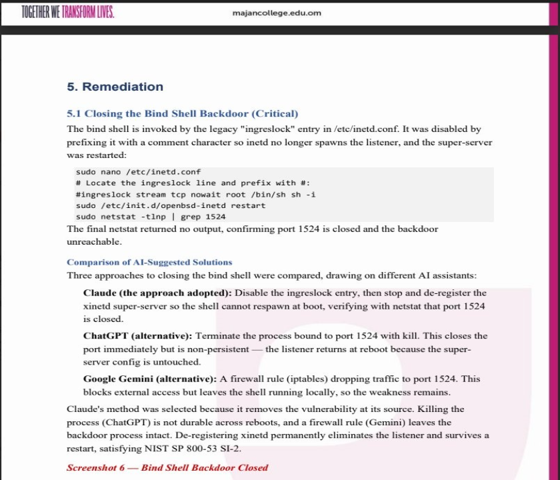
Figure 2 — A student’s report comparing AI tool remediation approaches.
A specific example surfaced during discussions: one student analyzed a severe CVE-linked vulnerability and found variances in remediation techniques among the AI tools. The student concluded that Claude's method, which addressed the vulnerability directly in configuration files, was the most effective and compliant with NIST standards. This experience exemplified the necessity for students to not only use AI effectively but also assess its recommendations critically.
Microlearning as an Instructional Strategy
Alongside practical exercises, I implemented a microlearning model for content delivery. Instead of lengthy lectures, I divided the course material into focused units of five to ten minutes, delivered through Majan’s MOVE platform. This approach ensured that students arrived at lab sessions prepped on the core concepts, allowing for application-based learning during lab time. Microlearning proved particularly beneficial for our diverse student body, accommodating their varying schedules and reducing potential overload.
Evaluating Impact on Student Performance
The results after a semester of applying this integrated approach were promising. Performance metrics in practical assessments, particularly those focusing on real-time vulnerability identification, showed marked improvement compared to prior semesters. Student feedback pointed to a newfound confidence in utilizing the tools independently, alongside a notable enhancement in their analytical writing during group discussions.
Key Insights for Educators
From my experience, here are three recommendations for educators interested in similar transformations:
- Use Industry-Standard Tools: Tools like Nashus Essentials can create an engaging, hands-on experience that connects students to the material immediately.
- Focus on Comparative Assessment: Rather than limiting students to a single AI tool, having them compare multiple outputs fosters critical thinking and promotes understanding of tool limitations.
- Implement Microlearning: Keep content digestible and tightly focused. This approach, combined with practical lab tasks, consolidates knowledge and enhances retention.
Cybersecurity education must evolve from merely transmitting information about threats to empowering students to think critically and act decisively in a fast-paced environment. The initiatives I implemented at Majan University College illustrate a shift toward integrating AI and practical applications into the learning model, gradually transforming how I approach cybersecurity education.
This overview distills findings from a peer-reviewed article: A Pedagogical Framework for Embedding Microlearning, Gamification, and Industry Credentials in Undergraduate Cybersecurity Education — Ramalingam Dharmalingam, Majan University College, Muscat, Sultanate of Oman.
Dr. Ramalingam Dharmalingam is an Assistant Professor at Majan University College. His research focuses on cybersecurity education, AI-assisted learning, and effective pedagogical strategies. He holds Senior Fellow status from Advance HE, UK, and is a Senior member of IEEE. Connect with Dr. Dharmalingam on LinkedIn.

Discussion
Sign in to join the discussion.